Autonomous Intercompany: The Foundation of Autonomous Finance

Autonomous Intercompany: The Foundation of Autonomous Finance
Autonomous Finance is rapidly moving from vision to reality.
Across the finance technology landscape, CFOs and finance transformation leaders are exploring how automation, AI, and intelligent workflows can reduce manual effort, improve decision-making, and create more resilient finance operations. Analysts such as Gartner have identified Autonomous Finance as a key direction of travel for the finance function; where processes increasingly execute with minimal human intervention while maintaining governance and control.
Yet there is a question that receives surprisingly little attention.
If finance can become autonomous, shouldn’t intercompany become autonomous too?
For many multinational organizations, intercompany remains one of the most manual, fragmented, and operationally intensive areas of finance. Transactions move between entities, reconciliations consume valuable time, settlements become bottlenecks, and teams spend far too much effort resolving exceptions rather than creating value.
The path to Autonomous Finance will not be achieved solely through AI. It will require organizations to transform the processes that create complexity in the first place. Intercompany is one of the most important.
What Does Autonomous Intercompany Mean?
When people hear the word autonomous, they often think immediately about artificial intelligence. Yet autonomy in finance is broader than AI.
At its core, autonomy is about creating processes that execute reliably, repeatedly, and with minimal manual intervention while maintaining governance, auditability, and control. It is about removing friction from day-to-day operations so finance teams can focus on oversight and decision-making rather than administration.
In the world of intercompany accounting, that means transactions are generated automatically, posted to the correct legal entities, reconciled continuously, and settled efficiently. This means that finance professionals are no longer required to spend countless hours coordinating activity between subsidiaries, resolving preventable mismatches, or moving information between disconnected systems.
Importantly, Autonomous Intercompany does not mean losing control.
In fact, the opposite is true.
The most effective autonomous processes embed controls directly into the workflow. When rules are applied consistently, transactions follow predefined policies. Every action is visible and auditable. Human oversight remains firmly in place, but the repetitive operational effort largely disappears.
That philosophy has always been central to Virtual Trader’s approach. Intercompany Cloud was designed to automate complex intercompany processes through configurable business rules, allowing organizations to process transactions consistently while maintaining complete visibility and transaction history.
Why Finance Teams Need It
The business case for Autonomous Intercompany is not primarily about technology. It is about outcomes.
Finance teams face mounting pressure from every direction. While regulatory requirements continue to expand, and global transaction volumes continue to increase, organizations are still expected to deliver greater insight with fewer resources.
Intercompany sits directly at the center of these competing demands.
When intercompany processes remain heavily manual, problems compound quickly. Reconciliations take longer. Close cycles stretch. Reporting becomes harder to trust. Teams spend increasing amounts of time investigating discrepancies rather than analyzing performance.
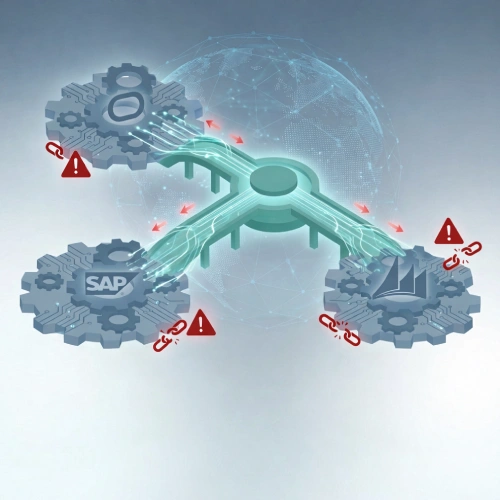
The challenge becomes even greater in organizations operating multiple ERP systems. Many multinational enterprises have grown through acquisition or regional expansion, leaving them with a patchwork of finance systems that were never designed to work together. As we explored recently in The Multi-ERP Paradox, these environments often create fragmented intercompany processes that become increasingly difficult to reconcile and govern as organizations scale.
Autonomous Intercompany helps solve this problem by creating a consistent operational layer across the enterprise.
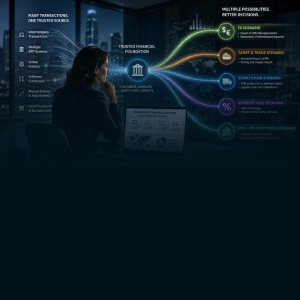
Instead of relying on individual entities to manage intercompany independently, organizations gain a unified framework that supports operational transfer pricing, tax compliance, treasury objectives, settlement strategies, and working capital management. Finance teams spend less time coordinating activity and more time supporting the business.
Built on an Autonomous Foundation
There is another aspect of autonomy that often receives less attention.
Autonomous business processes require autonomous infrastructure.
After all, automating critical finance operations only delivers value if the underlying platform is secure, resilient, and continuously available.
Intercompany Cloud runs on Oracle Autonomous Database, Oracle’s self-managing cloud database platform.
While the technical details are largely invisible to finance users, the business benefits are significant. Oracle Autonomous Database continuously manages activities that traditionally required ongoing administration, including patching, performance optimization, backup management, and fault recovery.
For finance leaders, this translates into something far more important than technology.
It means confidence.
Confidence that critical financial processes are running on enterprise-grade infrastructure. Confidence that security standards are maintained. And confidence that systems remain available when period-end activities intensify.
Oracle describes its Autonomous Database as a platform capable of automatically patching, securing, and repairing itself while minimizing downtime and reducing the risk of human error. For organizations pursuing greater operational autonomy, that provides a resilient foundation on which critical finance processes can run.
From Autonomous Transactions to Autonomous Finance
Intercompany is rarely viewed as a strategic transformation initiative. Yet few processes have greater influence across the finance organization.
Intercompany activity underpins transfer pricing programs, service fee allocations, reconciliations, settlements, cash management activities, and consolidation processes. Every one of these areas depends on accurate intercompany transactions flowing consistently through the business.
That is why improvements in intercompany often deliver benefits far beyond the intercompany team itself.
When transactions are created correctly at source and managed through a controlled process, close cycles accelerate. Reporting becomes more reliable. Treasury gains better visibility. Tax teams spend less time resolving data quality issues. Controllers spend less time investigating exceptions.
The impact extends across the finance function because intercompany touches so many critical workflows.
This is why Autonomous Intercompany should be viewed as a foundational component of Autonomous Finance.
Organizations frequently focus on AI initiatives because they are visible and exciting. Yet research from Deloitte and McKinsey suggests that the greatest productivity gains come when intelligence and automation are embedded directly into operational processes rather than treated as standalone initiatives.
Intercompany is one of the best examples.
By automating transaction creation, reconciliation, pricing, and settlement activities, organizations create a platform for broader autonomy throughout finance. Rather than constantly coordinating activity between legal entities, finance teams can focus on understanding performance, managing risk, and supporting strategic decision-making.
Autonomous Finance Starts with Autonomous Intercompany
Autonomous Finance is no longer a future concept. It is becoming a strategic priority for multinational organizations seeking greater efficiency, resilience, and control.
But achieving that vision requires more than adding AI to existing processes. It requires transforming the operational foundations of finance itself.
Intercompany remains one of the largest opportunities to eliminate manual effort, improve governance, and accelerate financial operations across the enterprise.
Virtual Trader’s Intercompany Cloud acts as an autonomous operating layer for intercompany, helping organizations automate transactions, streamline reconciliations, support transfer pricing processes, and optimize settlements while maintaining the auditability and control that finance leaders require.
If finance is moving toward autonomy, intercompany should be one of the first processes to get there.
Organizations looking to accelerate their journey toward Autonomous Finance should begin by strengthening the operational foundations that support it. Solutions for Intercompany Transactions, Intercompany Reconciliation, Operational Transfer Pricing, and Intercompany Settlements provide a practical starting point, helping finance teams reduce manual effort while maintaining control and compliance.
You can also read our article Embedded AI: The Only AI That Works at Enterprise Scale, which explores why enterprise AI delivers the greatest value when it is embedded directly into core finance processes rather than deployed as a standalone tool.
To learn more about how Virtual Trader can help your organization move toward Autonomous Finance, book a demonstration today: