Kickstart Your New Accounting Period with Six High-Impact Finance Moves

A new accounting period is the best moment to harden core finance processes before volumes and deadlines ramp up. Multinationals struggle most where intercompany touches tax, transfer pricing, treasury, and consolidation — especially across multiple ERPs and spreadsheet-heavy workflows.
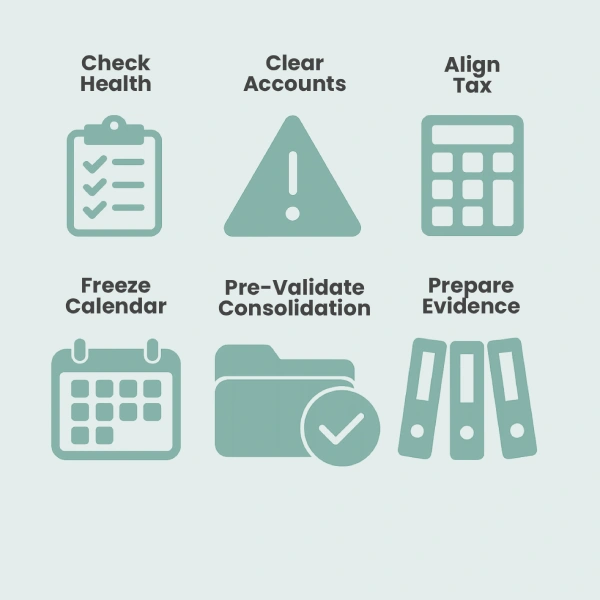
Virtual Trader’s guidance spans these pain points and emphasizes automation, audit trails, and a single source of truth so finance teams can spend time on analysis rather than firefighting. Below are six practical, beginning-of-period tasks that set you up for faster closes, cleaner audits, and stronger compliance.
#1 – Reset and Automate Operational Transfer Pricing (OTP)
What to do
Lock in current year transfer pricing policies at the transaction level and automate the end-to-end OTP workflow — data pull, price setting/testing, monitoring, true ups, IC invoicing, and journal posting — inside a single process rather than scattered spreadsheets. Establish dashboards for variances, segmented P&L, and audit trails.
Why it matters
Spreadsheet-driven OTP leads to late entries, missing drivers, and backdated journals that stress audits and drift ETR off plan. Moving OTP into a controlled workflow improves in-month accuracy and eliminates fragile, bolt-on logic. Avoid relying on Excel for critical processes like transfer pricing because error rates and version control risks are too high at multinational scale.
#2 – Rebuild Allocations & Service Fees with Driver Based Automation
What to do
Refresh drivers (e.g., headcount, revenue, floor space) and rate cards for management charges, shared services, and royalties. Configure a driver-based allocation engine to ingest GL data from any ERP, apply calculations, and post balanced journals — with preview, audit trail, and mid-year forecast/true-up logic.
Why it matters
Manual monthly compilations across disconnected ERPs and spreadsheets introduce timing lags, formula errors, and compliance exposure. Automation compresses close cycles, provides end-to-end traceability (driver > rate > journal line), and frees high-value staff for profitability analysis instead of cleanup.
#3 – Run a Cross ERP Intercompany Integration Health Check
What to do
Inventory all ERPs (e.g., SAP and Oracle), interfaces, and posting conventions. Establish an intercompany hub that standardizes business rules, posts entries where events occur, and gives all accounting users a single operational view, regardless of native ERP. Validate multi-COA mappings, currencies, tax-engine hooks, and security roles.
Why it matters
Acquisitions often leave organizations with multiple ERPs and incompatible data models. A centralized intercompany application synchronizes postings and eliminates batch-entry surges at period end, improving accuracy and timeliness for reporting and audit readiness.
#4 – Set up an Intercompany Shared Service Center Playbook and Subledger
What to do
Formalize SSC governance, SLAs, and escalation paths. Activate a dedicated intercompany subledger that separates IC from trade accounting, provides visibility to due-to/due-from balances, and standardizes global processes — so SSC teams can transact for all legal entities from one tool. Align the SSC playbook with complex multi-tier value chain rules captured in system logic.
Why it matters
Centralization delivers economies of scale and consistency while improving working capital via timely settlement of intercompany balances. With all entries and calculations recorded at source, audits become faster and less stressful, and changes in business practice or legislation can be implemented without custom code.
#5 – Launch an Advanced Treasury Netting & Settlement Calendar
What to do
Set a quarterly (or monthly) multilateral netting schedule for intercompany receivables/payables with defined FX policies, interest, tax logic, and automated settlement journals across every ERP. Establish global cash visibility and eliminate manual bank-to-bank settlements wherever possible.
Why it matters
Fragmented cash and disjointed settlements create FX exposure, duplicate fees, and off-books balances that obscure liquidity. Centralized, automated netting has been shown to cut internal payments dramatically, reduce borrowing, and compress close cycles — all with audit-ready trails that satisfy SOX/BEPS aligned controls.
#6 – Configure Intercompany Eliminations and AI-Enabled Compliance Checks
What to do
Book IC markup and profit in inventory (PII) at the time of transaction to dedicated GL accounts so consolidation systems can eliminate automatically — no late-night reclasses. Layer embedded AI into workflows to flag anomalies, prepare journals, and maintain auditability natively inside the financial system rather than via bolt-ons. Tie these controls to a tax compliance readiness plan for evolving regimes (e.g., Pillar Two, indirect tax changes), focusing on automation, transparency, and documentation.
Why it matters
Manual eliminations across entities, SKUs, and currencies slow the close while raising reporting risk. Booking compliant offsets at source increases speed and accuracy. Embedded (not bolt-on) AI is the only approach that scales securely for finance, leveraging ERP grade access controls and audit trails. At the same time, tax authorities and regulations are shifting — so automation and centralized evidence are essential to remain compliant without overloading lean teams.
Putting It All Together
By implementing these six tasks with Virtual Trader, you create a fully connected intercompany backbone from day one. Virtual Trader ensures that transfer pricing is automated and monitored at the transaction level, allocations flow transparently, and postings synchronize seamlessly across multiple ERPs. Shared-service teams gain a dedicated intercompany subledger for consistent global processes while advanced treasury netting reduces cash leakage and improves liquidity. Crucially, you’ll have embedded AI and tax readiness woven into the same workflows, replacing risky spreadsheets with controlled automation and audit trails. With Virtual Trader, you shorten close cycles, reduce advisory costs, and free finance teams to focus on strategic decision support, all within a single, scalable platform built for enterprise complexity.
Ready to transform your intercompany operations? Discover how Virtual Trader delivers automation, compliance, and control at enterprise scale by booking a demo today.